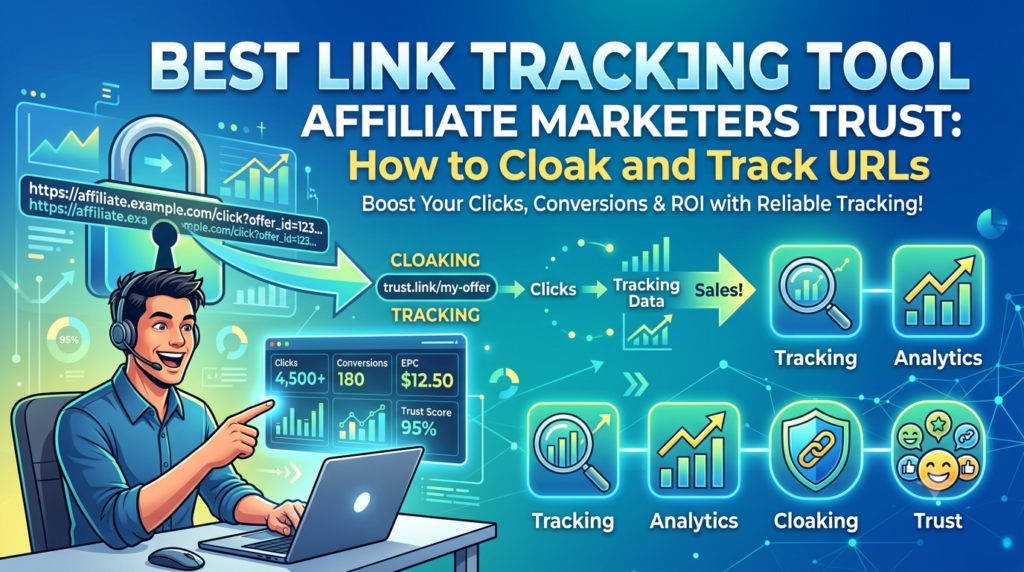

If you run affiliate campaigns across multiple networks, you already know the pain of messy, unbranded links. Long affiliate URLs full of tracking IDs look untrustworthy, get blocked by ad platforms, and make it nearly impossible to know which campaign, page, or creative actually drove a sale. That’s exactly why finding the best link tracking tool affiliate marketers can rely on matters so much in 2026, and why more publishers are rethinking how they manage outbound links entirely.
In this guide, we’ll walk through what link tracking software actually does, why cloaking protects your commissions, and how to choose a platform that handles click tracking, reporting, and split testing without slowing your site down. We’ll also compare several popular options — including a well-known Pretty Links alternative — so you can shorten and cloak a URL cleanly and scale your affiliate business with confidence.
Why Affiliates Need a Dedicated Tracking Tool
Every affiliate marketer eventually hits the same wall: raw affiliate links are long, ugly, and easy for competitors or platforms to spot. Without a dedicated system, you’re stuck copying and pasting unwieldy URLs into emails, social posts, and landing pages, hoping nothing breaks along the way.
A purpose-built tracking tool solves several problems at once. It shortens and brands your outbound links, records every click with useful metadata such as device, location, referrer, and browser, and lets you redirect traffic without editing the original destination each time an offer changes. This is the core reason a strong tracking platform becomes central infrastructure for serious affiliates rather than a nice-to-have extra.
Beyond aesthetics, the data itself is how you make decisions. Which blog post converts best? Which email subject line drives more engagement? Which creator partnership is actually profitable? Reliable reporting answers all of these questions with real numbers instead of guesswork, and over time that data compounds into a genuine competitive advantage.
There’s also a durability argument worth making. Networks change commission structures, offers get discontinued, and merchants occasionally shut down without warning. When your links are cloaked and centrally managed, you can redirect an entire campaign to a replacement offer in minutes rather than manually editing every page, post, and email where the original link was shared. This is precisely the value proposition behind the best link tracking tool affiliate businesses adopt as they move from casual promotion to a repeatable, scalable operation.
For newer affiliates, it can help to think of a tracking platform as the control panel for every link you’ll ever publish. Instead of scattering raw URLs across dozens of posts, you route everything through one system that lets you cloak URL destinations, monitor performance, and make changes centrally.
What Is Affiliate Link Cloaking?
Affiliate link cloaking is the practice of hiding a long, parameter-heavy URL behind a short, branded redirect — for example, turning a messy tracking link into something like affiliatesmanual.com/go/product-name. The visitor still lands on the same offer page, but the link itself looks clean, trustworthy, and on-brand.
There are a few reasons affiliates rely on this technique:
- Trust and click-through rate: A branded, readable link earns more clicks than a cryptic one stuffed with codes and query strings.
- Commission protection: Cloaking helps prevent theft, where someone strips out your affiliate ID and quietly replaces it with their own.
- Platform compliance: Some social platforms and ad networks restrict raw affiliate URLs, so a first-party domain redirect is often required to run campaigns at all.
- Flexibility: You can update where a cloaked link points without editing every post, video description, or email where it was originally shared.
When people search for how to cloak URL destinations properly, they’re usually trying to solve one or more of these exact problems. A dedicated affiliate link cloaking feature inside your tracking software turns what used to be a manual redirect headache into a five-minute setup, and it pairs naturally with click tracking so you can see the results of the change immediately.
Key Features to Look for in Tracking Software
Not every shortener qualifies as real link tracking software, and this is where a lot of affiliates get tripped up early on. Before choosing a platform, check that it covers these fundamentals — they’re the baseline for any tool marketed as the best link tracking tool affiliate marketers should trust with their commissions.
1. Custom Domain Support
Using your own domain for redirects, instead of a generic shortener domain, is essential for branding and for avoiding spam filters. This is a non-negotiable feature of any serious affiliate link cloaking setup, since generic domains are frequently blacklisted, and it’s usually the very first thing to configure when you cloak URL redirects for a new site.
2. Detailed Click Analytics
Look for click tracking that captures timestamps, geography, device type, referring source, and UTM parameters. The deeper the data, the easier it becomes to optimize campaigns instead of guessing what worked.
3. Split Testing and Rotation
The best link tracking tool affiliate marketers use should let you rotate traffic between multiple offers or landing pages under a single cloaked link, so you can see which converts best without manually swapping URLs every few days.
4. Fraud and Bot Filtering
Reliable software filters out bot clicks and suspicious traffic so your reports reflect real human engagement rather than inflated numbers that lead to bad decisions.
5. Team and Client Access Controls
If you manage campaigns for clients or work with a team, role-based permissions matter. You want collaborators to view reports without being able to change redirect destinations or delete historical data.
6. API and Integration Support
Connecting your data to spreadsheets, dashboards, or a CRM saves hours of manual reporting every month and makes it easier to combine affiliate performance with other marketing metrics.
Comparing the Top Link Tracking Tools for Affiliates
Here’s a practical comparison of platforms affiliates commonly evaluate when they’re researching the best link tracking tool affiliate marketing realistically requires at different stages of growth.
| Tool | Best For | Cloaking | Split Testing | Notable Strength |
| ClickMagick | Advanced attribution | Yes | Yes | Deep funnel and multi-step tracking |
| Voluum | High-volume media buyers | Yes | Yes | Enterprise-grade reporting at scale |
| ThirstyAffiliates | WordPress-based affiliates | Yes | Limited | Simple, lightweight, plugin-based |
| Pretty Links | WordPress bloggers | Yes | Limited | Popular entry-level option |
| Rebrandly | Brand-focused marketers | Yes | No | Strong custom domain branding |
ClickMagick tends to appeal to affiliates running paid traffic who need to trace a sale back through several intermediate steps, from ad click to landing page to final checkout. Voluum takes that a step further with infrastructure built for very high click volumes, which suits media buyers spending heavily across multiple ad networks simultaneously.
ThirstyAffiliates and Pretty Links both live inside the WordPress ecosystem, which makes them approachable for bloggers who want cloaking without leaving their existing dashboard. Rebrandly, meanwhile, focuses heavily on branding and custom domains, making it popular with marketers who care about link consistency across several properties. Each tool takes a slightly different approach to redirects, reporting depth, and pricing, so the right pick depends heavily on your traffic volume and how much attribution detail you actually need. In practice, the best link tracking tool affiliate teams settle on is whichever platform matches their current scale rather than the one with the longest feature list — a small blog rarely needs the same link tracking software as a seven-figure media buying operation.
The Best Pretty Links Alternative for Growing Affiliates
Pretty Links is a well-known WordPress plugin, and it’s a reasonable starting point for beginners. But as campaigns scale, many affiliates outgrow it — they need tracking that isn’t tied to a single WordPress install, deeper reporting, and stronger fraud filtering than a lightweight plugin typically offers.
If you’re evaluating a Pretty Links alternative, prioritize platforms that offer:
- Tracking that works independently of your website’s CMS, so you’re not locked into one WordPress installation
- Real-time dashboards instead of delayed or overly basic reporting
- Multi-domain support for running several brands or niche sites from a single account
- Faster redirect speed, since a slow cloaked link can quietly hurt both user experience and conversions
Choosing the right alternative often comes down to how much you value flexibility outside the WordPress ecosystem versus staying inside a familiar, plugin-based workflow. Larger affiliate operations, agencies, and anyone managing multiple sites usually benefit most from moving beyond a single-plugin setup.
How to Cloak a URL Step by Step
Setting up link cloaking doesn’t have to be complicated. Here’s a general workflow that applies across most tracking platforms:
- Connect your custom domain to the tracking platform so redirects live on a branded domain rather than a generic shortener.
- Paste your raw affiliate URL into the tool’s link creator, including any existing tracking parameters from the network.
- Choose a readable slug, such as /go/offer-name, instead of a random string of characters that means nothing to visitors.
- Add UTM parameters if you want extra attribution data inside your analytics platform later on.
- Test the redirect in an incognito browser window to confirm it lands on the correct offer page every time.
- Monitor performance data over the following days to confirm clicks are being recorded accurately and nothing is misfiring.
Once this process is set up, updating a campaign in the future is simple: you change the destination behind the cloaked link, and every place you’ve shared that link automatically points to the new offer without any further edits.
Click Tracking Metrics That Actually Matter
Not all data is equally useful. Focus on the metrics that inform real decisions rather than vanity numbers:
- Click-through rate by source: Tells you which channel — email, social, blog, or paid ad — is driving the most engagement.
- Conversion rate per link: Clicks alone don’t pay the bills; conversions do, so this is often the most important single number.
- Geographic breakdown: Useful for tailoring offers to regions with the highest intent or adjusting currency and language.
- Device split: Mobile-heavy traffic may need different landing pages than desktop traffic to convert well.
- Time-of-day patterns: Helps schedule content or ads when your audience is most active and most likely to engage.
Solid click tracking turns raw numbers into a repeatable playbook you can apply to future campaigns instead of starting from scratch every time.
Compliance and Redirect Speed Considerations
Two details get overlooked more often than they should: legal compliance and technical performance. Most affiliate programs require some form of disclosure near cloaked links, so check individual network terms rather than assuming a blanket rule applies everywhere.
On the technical side, redirect speed matters more than it might seem. A cloaked link that takes an extra second or two to resolve can noticeably reduce conversions, particularly on mobile connections. When comparing link tracking software, look for platforms that host redirects on fast, reliable infrastructure rather than relying on slow, shared servers, since sluggish affiliate link cloaking quietly undermines the trust benefit it’s supposed to provide.
Common Mistakes Affiliates Make With Link Management
Even experienced affiliates run into avoidable issues:
- Using generic shorteners for affiliate links, which look untrustworthy and often get flagged by spam filters.
- Skipping cloaking entirely, exposing raw affiliate IDs that can be stripped and replaced by someone else.
- Ignoring bot traffic, which inflates numbers and skews decision-making across an entire campaign.
- Not testing redirects after setup, which can lead to broken links that quietly lose commissions for weeks.
- Overlooking mobile performance, since a slow redirect on mobile data can cost real conversions.
Avoiding these mistakes is often the difference between a setup that just looks tidy and one that genuinely improves return on investment.
Final Thoughts
Choosing the best link tracking tool affiliate marketers depend on isn’t just about shortening links — it’s about protecting commissions, understanding your audience, and making smarter decisions with real data. Whether you stick with a lightweight, WordPress-based option or move to a more robust alternative, the goal stays the same: reliable link cloaking, accurate reporting, and the confidence to redirect traffic without worrying about broken links or lost revenue.
Start by auditing your current links, choosing software that matches your traffic volume, and setting up custom domain redirects properly from day one. The right platform pays for itself the first time it saves an at-risk commission.